Alzheimer's disease includes Alzheimer's disease, vascular dementia (VAD) caused by cerebrovascular accident and mixed dementia. Alzheimer's disease accounts for about 70%, vascular dementia 17% and mixed dementia 13%. The fatal factors of AIDS, heart disease and stroke secondary diseases showed a downward trend, but the mortality rate of Alzheimer's disease showed an upward trend. According to international practice, the disease was named "Alzheimer's disease" (AD) by the first discoverer in 1910. It is a neurodegenerative disease with progressive memory and cognitive impairment as the main clinical characteristics and multiple causes.
The early symptom of Alzheimer's disease is memory loss. The patient turns around and forgets what he has just done, which has no impact on long-term memory and still has a good memory of past events. The middle and late stage of the disease is the loss of cognitive function. The patient will get lost and can't go home after going out. Further development, patients lose their ability to take care of themselves in daily life and need to be taken care of. In the later stage, there will be some mental symptoms such as agitation, depression and anxiety. The incidence rate of Alzheimer's disease increases year by year after the age of 65. The incidence rate is doubled every 5 years, and the incidence rate of 85 years old can reach 25%. The incidence rate of female is higher than that of male. The time from diagnosis to death is generally 4 ~ 6 years. Alzheimer's disease not only brings pain to patients, but also brings great spiritual and economic burden to families and society.
Alzheimer's disease has two types: early onset and late onset. Early onset patients come on around the age of 40, so some domestic scholars translate Alzheimer's disease as Alzheimer's disease. There are three gene mutations in early-onset patients. Most patients with Alzheimer's disease are late-onset.
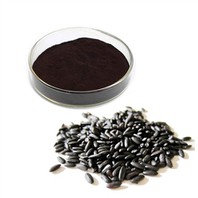
After a series of chemical, quality control, pharmacological mechanism and toxicological studies, Huperzine Serrata Leaf Standardized Extract was finally developed as a new drug for the treatment of Alzheimer's disease.
Compared with other similar drugs, huperzine A has the characteristics of unique chemical structure, easy to penetrate the blood-brain barrier, good oral bioavailability, high selectivity for acetylcholinesterase in the brain, longer action duration and weaker peripheral cholinergic side effects.
Huperzine Serrata Leaf Standardized Extract can be used for the elderly. Huperzine A for injection is an exclusive dosage form in China, which is used to enhance memory, improve memory damage, protect nerves and improve brain activity rate. It is clinically used for benign memory impairment and can improve the memory impairment caused by dementia patients and brain organic lesions. It is also used in the treatment of myasthenia gravis. According to the data of Alzheimer's disease international, there are about 6 million dementia patients in China, and the number of patients doubles every 20 years. Huperzine A for injection has a large market space and good sales in the future.